Orlando Neighborhoods
Orlando is less a single downtown than a scatter of distinct districts spread across Central Florida — theme-park strips, a lakeside arts town, a brick-street Main Street and the resort suburbs in between. Here's how the City Beautiful fits together.
Updated June 2026
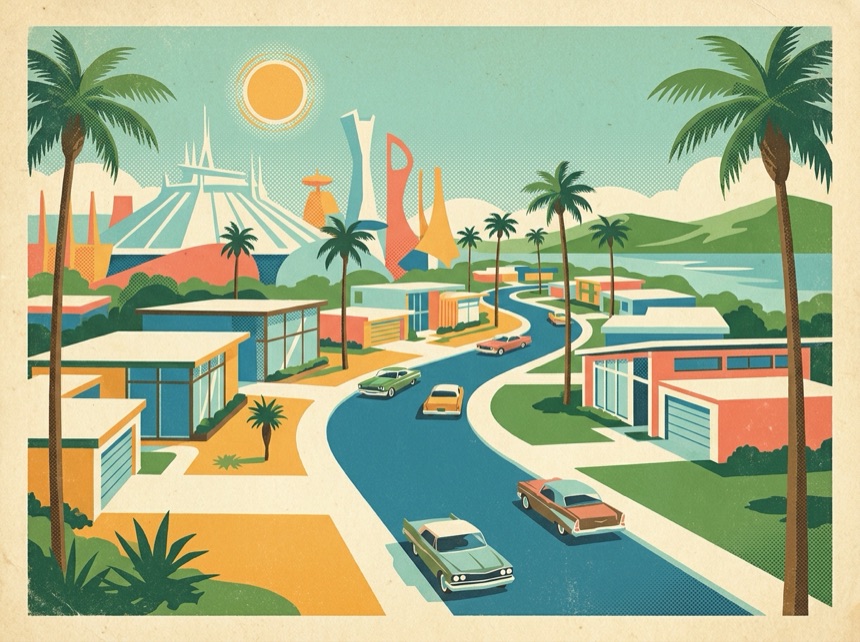
First-time visitors picture Orlando as one big theme-park megaplex, and a good chunk of it is exactly that. But the metro sprawls for miles across flat, lake-dotted Central Florida, and each corner of it has its own feel — the neon tourist strip, the genteel old college town, a brick-street downtown around a fountain lake, a glassy new "city of the future," and the family-resort sprawl out toward the parks.
Where you base yourself shapes the whole trip. Park-hoppers want to be close to the gates; food lovers and date-night couples drift toward Winter Park and Restaurant Row; families chasing value spread out into Kissimmee. This page is the map in your head before you book — a quick tour of the districts that matter, with a deeper postcard for each one a click away.
Where to go & stay
Six neighborhoods that cover most of how visitors actually use Orlando — from the tourist strip to the town the locals keep for themselves.
A perfect day off the parks
Skip the gates for a day and string together the Orlando most visitors never see.
- Start with coffee and a stroll down brick-paved Park Avenue in Winter Park, then duck into the Morse Museum for the Tiffany glass.
- Take the Scenic Boat Tour through Winter Park's chain of lakes — an hour of cypress, canals and lakefront estates.
- Head to Downtown for a loop around Lake Eola and a turn on the swan boats under the skyline.
- Lunch on a patio in Thornton Park, then browse the bungalow-lined side streets.
- Save dinner for Restaurant Row in Dr. Phillips — book ahead on weekends, it fills fast.
Where to go next
Each neighborhood has its own postcard — pick a corner of Orlando and dig in.
International Drive
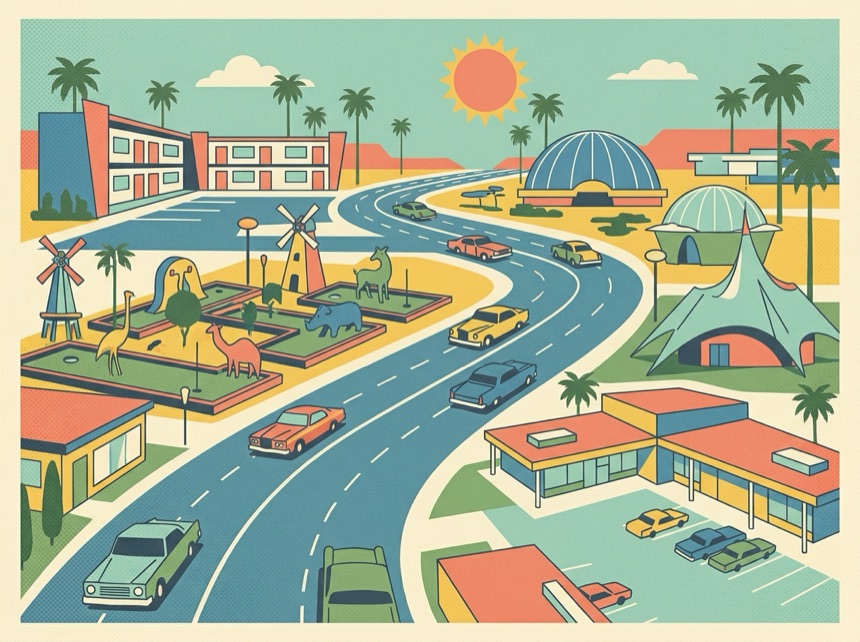
The neon tourist spine — ICON Park, the Orlando Eye, mini-golf and the city's hotel heartland.
Winter Park
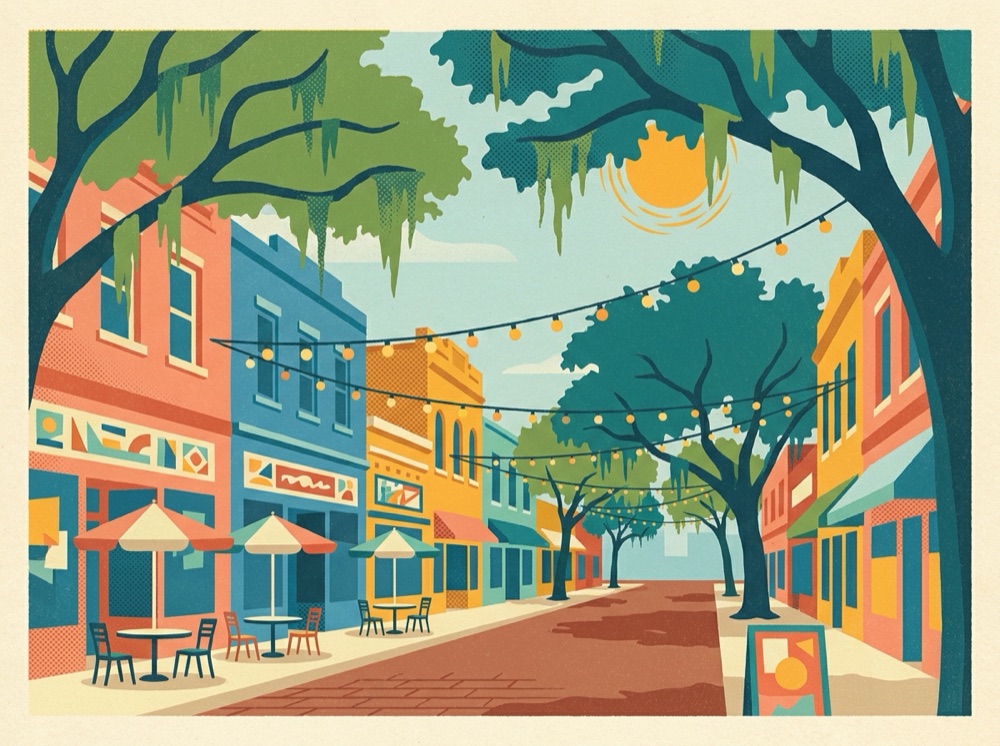
Park Avenue, the Morse Museum's Tiffany glass and the classic Scenic Boat Tour.
Downtown Orlando
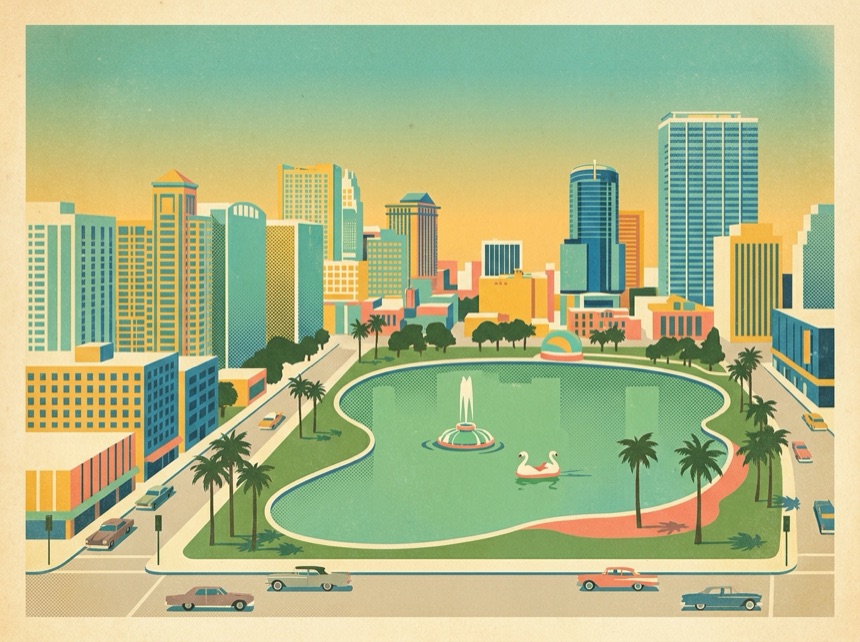
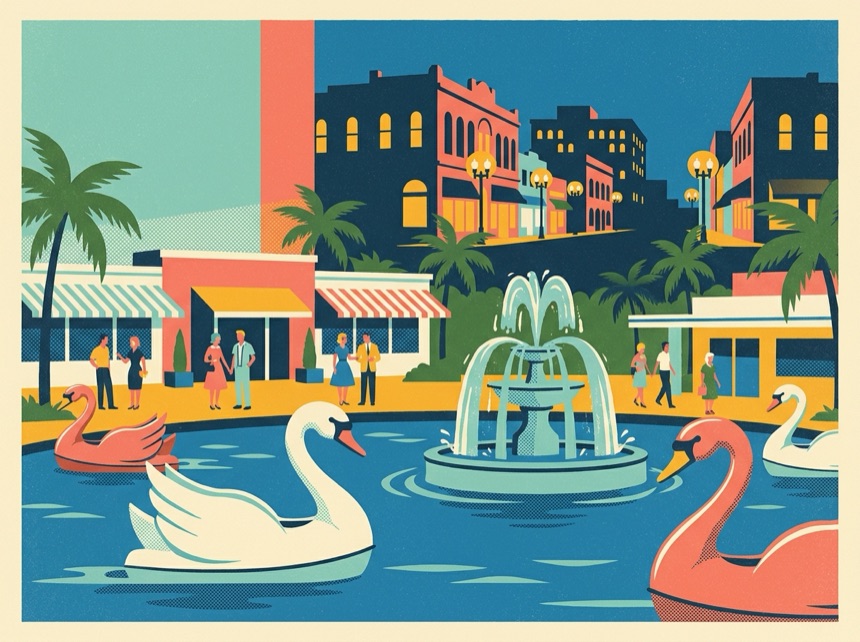
Lake Eola's swan boats and fountain, Thornton Park patios and Church Street nights.
Kissimmee & Celebration
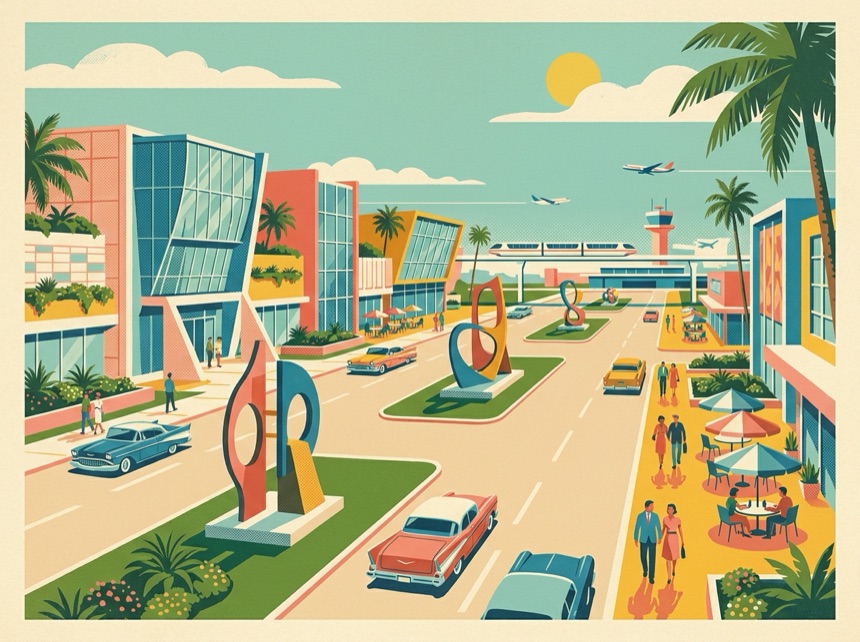
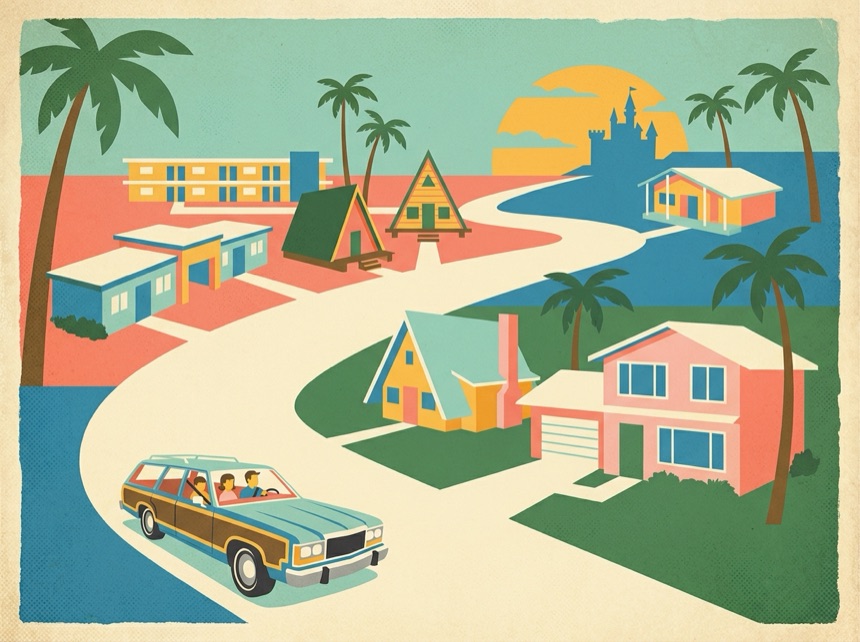
Vacation homes near Disney, Old Town's Ferris wheel and Celebration's tidy Main Street.
Common questions
Where should I stay in Orlando for the theme parks?
For Walt Disney World and the value-minded family crowd, Kissimmee along US-192 has the most affordable vacation homes and hotels. For Universal Orlando and a walkable mix of attractions, dining and hotels, International Drive is the closest tourist hub. Dr. Phillips and Lake Buena Vista sit conveniently between the two resorts.
What is the best Orlando neighborhood for a non-park day?
Winter Park is the favorite, with brick-paved Park Avenue, the Tiffany glass at the Morse Museum and the 1938 Scenic Boat Tour. Downtown Orlando around Lake Eola Park is another easy choice, and Dr. Phillips' Restaurant Row is where the city goes to eat well away from the parks.
How far apart are Orlando's neighborhoods?
Greater Orlando is spread across Central Florida, so districts are often a 30-to-45-minute drive apart. International Drive, Dr. Phillips and Kissimmee cluster near the parks on the south and west sides, while Winter Park and downtown sit to the north and east, and Lake Nona is southeast near the airport. A rental car makes connecting them much easier.
Is downtown Orlando worth visiting?
Yes, if you want the city beyond the parks. Lake Eola Park is the centerpiece — a walkable lake loop with swan boats, a lit fountain and a Sunday farmers market — and the adjacent Thornton Park has bungalow-lined streets full of cafes and patios, with Church Street handling the nightlife.
Does Orlando have a beach?
No. Orlando sits inland in Central Florida, so there are no ocean beaches in the city itself — but you'll find lakes, springs and the parks' own water parks nearby. The nearest Atlantic beach, Cocoa Beach, is about an hour east, and the Gulf beaches near Clearwater and St. Pete are roughly an hour and a half west, both doable as day trips.
What is Restaurant Row in Orlando?
Restaurant Row is the nickname for the stretch of Sand Lake Road in the Dr. Phillips neighborhood, between International Drive and Apopka-Vineland Road. It packs in more than thirty restaurants, from steakhouses and sushi to fine dining, and sits conveniently between Disney and Universal, making it a popular dinner stop for park visitors.